
Galactic Merge Idle
VOODOOArcade
3.4164.00 Reviews
- Version
- 1.8.0
- Installs
- 100.00K
- Age Rating
- Everyone
Screenshots
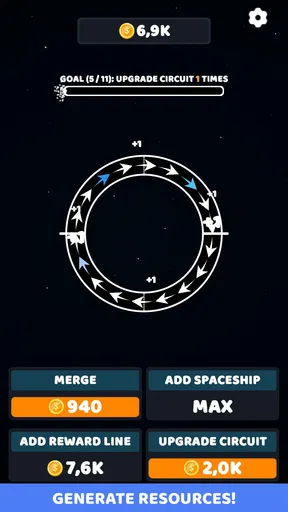
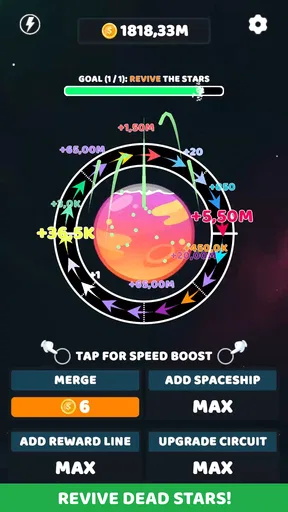
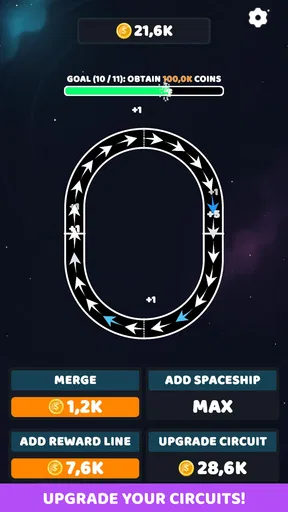
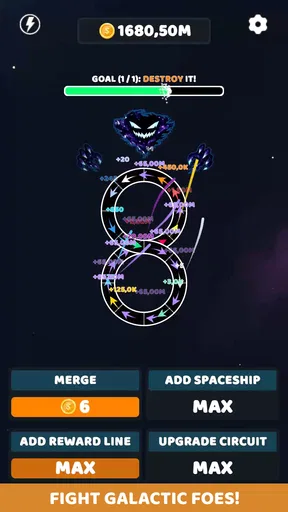
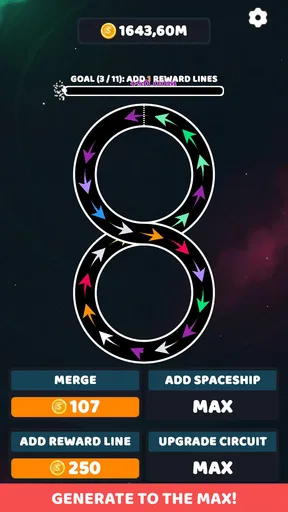
Our Review of Galactic Merge Idle
 Analysis by Appyee
I spent time with Galactic Merge Idle as a compact arcade game built around a simple space-production idea: create ships, combine progress, and keep expanding while the game continues working in the background. That basic loop is easy to understand within moments, but the real question is whether the idle structure stays satisfying after the first burst of progress. My answer is mixed in a useful way. I enjoyed the quick decisions and the relaxed pace, yet I also found that this is the kind of game where patience matters more than reflexes.
Developed by VOODOO, it is free to download and aimed at Everyone, with support for devices running Android 8.0 or later. Its average rating is 3.5 from around 390 ratings, while the game has passed 50 thousand installs. Those figures suggest a modest audience rather than a huge established community, so I would approach it as a small, accessible arcade time-killer instead of a major space-management experience.
How the space-merging loop feels in everyday play
The appeal is immediate: I can open the game, make a few moves, combine progress, and leave it running while I do something else. That makes it a natural fit for short sessions. I would play for a few minutes while waiting for a train, check it again during a coffee break, and return later to see how much the production chain had advanced. It does not demand the concentration of a traditional action arcade game, and that is both its strength and its limitation.
The central activity is about building a larger galactic operation from smaller steps. Instead of asking me to steer a ship through hazards or memorize complicated controls, the game focuses my attention on what to merge next and when to reinvest the results. The space theme gives that familiar idle formula a pleasant sense of progression, even though the underlying decisions remain deliberately light.
I found the first stage of play more engaging than the later routine. Early progress feels visible because each improvement changes what I can do next. Once the production rhythm settles, the experience becomes more about checking, collecting, and deciding whether to continue now or return later. That transition is important: players looking for constant action may lose interest, while anyone who likes gradual growth may appreciate the low-pressure structure.
Small decisions matter more than fast tapping
One useful way to approach the game is to avoid treating every available action as equally urgent. I got better results when I paused briefly to consider whether a merge would create immediate progress or simply clear space without improving my position meaningfully. In an idle game, the temptation is to tap whenever something is available, but a little restraint makes the loop feel more intentional.
I also recommend using the game in planned check-ins rather than leaving it as a constant distraction. A quick visit after a longer break can feel rewarding, while repeatedly reopening it every minute turns the experience into a chore. This is one of the less obvious trade-offs: the game works best when it supports your routine instead of trying to become your routine.
For a realistic everyday example, imagine opening it before starting a work or study session. I would make the useful merges, leave the production moving, and return during a scheduled break. That approach keeps the game from interrupting concentration while still giving the idle system a purpose. It is more enjoyable than staring at the same screen waiting for a small gain.
Where progress starts to feel slower
The relaxed design also creates friction. When progress depends on waiting, a player can reach a point where the next meaningful improvement feels distant. The game then asks for patience rather than skill. That is not automatically unfair, but it changes the emotional rhythm: the satisfying decisions become less frequent, and the game can begin to feel like a progress tracker.
I would not recommend it to someone who wants a clear stream of stages, increasingly demanding enemies, or a strong sense of mastery. A conventional arcade title with direct controls will offer more immediate feedback. A deeper management game will provide more planning and long-term strategy. Galactic Merge Idle sits between those options, offering a lighter commitment than both but also less depth.
Players who enjoy idle games should pay attention to how they personally respond to waiting. If delayed rewards feel calming, the structure may suit you. If you need every session to deliver a new challenge, the same structure may feel repetitive. The game does not solve that difference; it exposes it quickly.
Spending, free access, and the pressure question
The game is free, but it includes in-app purchases priced from $1.99 to $49.99 per item. That range matters because it places the spending decision directly alongside the idle progression loop. I can begin without paying, which is the right starting point for anyone unsure about the format, but the presence of higher-priced items means I would avoid making a purchase before understanding how much waiting the free experience asks from me.
I see the best approach as treating purchases as optional acceleration rather than part of the basic entry cost. However, I cannot responsibly promise that spending is necessary, nor can I claim that every purchase offers good value. The available purchase range confirms that paid options exist, but it does not establish their exact contents or whether they change the balance of progression. I would therefore judge them cautiously and only consider a small purchase if the free loop already feels enjoyable.
This is also where the game may create pressure for different players. Someone who is happy to return later may see the waiting as the point of the experience. Someone who wants to unlock the next improvement immediately may feel encouraged to spend. That pressure is not the same for everyone, so I would set a personal limit before playing, especially if the gradual rewards make you impatient.
My practical advice is simple: play long enough to understand the normal rhythm before buying anything. If the free version feels pleasant and the paid option merely saves time, you can make a more informed choice. If the game only becomes enjoyable after acceleration, I would skip the purchase and move on to another arcade title.
Fairness and the absence of a competitive promise
Galactic Merge Idle is easiest to evaluate as a personal progression game, not as a test of competitive skill. I did not approach it expecting precise timing, ranked matches, or a contest where every player needs identical conditions. That makes the spending question different from the one in a competitive multiplayer game: the main concern is whether paying changes my own pace, not whether another player can buy an advantage over me.
Even so, fairness still matters. A fair idle experience should let a free player understand the loop, make meaningful choices, and feel that progress is possible without constant payment. This game’s free entry gives it a reasonable starting point, but the purchase range means I would keep an eye on how often paid acceleration appears in the experience. I would not call the game unfair solely because purchases exist; I would call it a cautious recommendation until I knew whether the unpaid route remained satisfying over longer play.
That distinction is useful when comparing it with alternatives. A traditional arcade game usually ties progress more closely to performance, so improvement comes from practice. A typical idle game ties progress to time and optimization, so improvement comes from managing the cycle. Galactic Merge Idle belongs firmly to the second group. If you want your success to depend on your hands and reactions, choose the first type. If you prefer checking a growing system and making occasional decisions, this one is closer to what you want.
For me, the strongest sign of fairness is whether I can stop playing without feeling punished. The game works better when I treat it as a background activity and return when convenient. If missing a session makes you feel that you have fallen irreversibly behind, an idle title can become stressful. I would use this one casually and avoid turning its production pace into a daily obligation.
What I would check before committing to it
The current version is 1.7.2, which tells me the game has already received updates beyond its initial release. That is useful context, but a version number alone does not tell me how frequently the experience changes or whether future updates will address individual concerns. I would install it for a short trial first rather than assuming that the current build will provide months of fresh content.
I would also check how the game behaves on my particular device. Android 8.0 is the minimum operating system, so the compatibility requirement is relatively broad, but that does not guarantee identical performance on every phone or tablet. Since this is an idle arcade game, smoothness is less demanding than in a fast action title, yet battery use and interruptions can still affect whether background progress feels convenient.
Another point I would clarify through personal use is how much active input the game expects. The broad idea is easy to understand, but the balance between active merging and passive waiting determines the real experience. If you enjoy making frequent choices, you may want to play in shorter, more involved sessions. If you prefer a nearly hands-off system, you may find the active moments more limited than expected.
I would also keep expectations realistic about the space theme. It gives the progression a recognizable identity, but this is not the same as a full exploration simulator or a story-driven science-fiction adventure. Anyone downloading it for deep lore, tactical ship combat, or a large galaxy to navigate is likely choosing the wrong kind of game. The space setting supports the idle loop; it does not replace it with another genre.
Who should install it, and who should skip it
I would recommend giving it a chance if you like merging mechanics, gradual upgrades, and games that fit into spare minutes. It is especially suitable for players who want something uncomplicated to revisit during the day. The Everyone rating also makes it an approachable choice for a broad audience, although the presence of purchases means I would still use the device’s purchase controls carefully.
I would skip it if you dislike timers, repeated collection, or progress that arrives in small increments. I would also choose a different arcade game if your priority is challenge rather than relaxation. Players who want a strategic economy with many interacting systems may find the decisions too narrow, while players who want an endless stream of action may find the idle pacing too quiet.
The game is also not my first choice for someone who wants a completely cost-free experience with no purchase temptation. It can be started without paying, but in-app purchases are part of the design environment. If that is a deal-breaker, a premium arcade game with a single upfront price may be a better fit, provided its own model suits you.
My trust verdict after weighing the trade-offs
The best reason to try Galactic Merge Idle is its low commitment, not the promise of deep strategy. I can understand the loop quickly, make progress in short visits, and let the space-production theme give a familiar idle formula a bit of personality. VOODOO keeps the concept approachable, and the free starting point makes it easy to decide for myself whether the rhythm works.
My reservation is that the same simplicity can become repetitive, particularly when progress slows and the available choices stop feeling fresh. The paid items, ranging from $1.99 to $49.99, add another reason to remain deliberate. I would not spend until I had confirmed that the unpaid game already feels worthwhile, and I would not interpret a purchase as a substitute for depth.
In the end, I see this as a modest arcade companion rather than a game I would build my entire gaming routine around. I would install it for relaxed check-ins, keep my expectations focused on merging and gradual growth, and remove it if the waiting begins to feel like pressure. For the right player, that restraint is exactly what makes it pleasant. For anyone seeking skill-based action or substantial management complexity, a different alternative will be more rewarding.
Galactic Merge Idle earns my cautious recommendation as a free trial: enjoyable when treated as a small background pastime, but not strong enough for me to recommend blind spending or promise long-term variety. Try the free loop first, decide whether its pace fits your day, and let that answer—not the space theme alone—determine whether it deserves a permanent place on your device.
Verdict
Strengths of Galactic Merge Idle
- Simple merge mechanics are easy to learn and play casually.
- Idle rewards let progress continue while you are away.
- Space-themed visuals give the game a pleasant atmosphere.
- Short sessions make it suitable for quick breaks.
- Upgrades provide clear goals and a steady sense of progress.
Limitations of Galactic Merge Idle
- Progress can feel slow without frequent returns to the game.
- Repeated merging may become monotonous after extended play.
- Some upgrades may require substantial in-game currency.
- Ads can interrupt the flow or be needed for extra rewards.
- The gameplay offers limited depth for players seeking strategy.
Other Releases by VOODOO
View All


Similar Picks in This Category
View All
Subway Surfers
SYBO Games4.6

Stickman Party 234 MiniGames
PlayMax Game Studio4.6

Subway Princess Runner
Ivy4.4

Temple Run
Imangi Studios4.2

Zombie Tsunami
Mobigame SAS4.6

Stack Ball - Crash Platforms
CASUAL AZUR GAMES4.5
Frequently Asked Questions
What is Galactic Merge Idle?
Galactic Merge Idle is a casual idle and merge game built around expanding a futuristic space operation. You combine matching objects or resources to create upgraded versions, unlock new production possibilities, and gradually improve your galactic income. Much of the progress continues through automated systems, making it suitable for short play sessions as well as longer periods of upgrading and experimentation.
How does the gameplay work in Galactic Merge Idle?
The main gameplay loop combines merging with idle progression. You collect or generate space-themed items, drag matching pieces together to produce stronger ones, and use the resulting rewards to upgrade your operation. As new areas, machines, or production options become available, the game becomes more strategic because deciding what to merge first can affect how quickly you earn resources and reach the next milestone.
Can I play Galactic Merge Idle without an internet connection?
Offline availability can depend on the version of the game and the feature being used. Basic progression may continue or remain accessible without a constant connection, but advertisements, cloud saving, special events, purchases, and certain online services may require internet access. Before relying on offline play, it is best to test the installed version and check its current store description or in-game notices.
Does Galactic Merge Idle include ads or in-app purchases?
Galactic Merge Idle may use optional or required advertising as part of its free-to-play monetization, such as rewarded videos that provide extra resources, faster production, or temporary bonuses. It may also offer in-app purchases for currency, boosters, or convenience features. You can usually progress without spending money, although purchases and advertisements can make upgrades feel faster and reduce waiting times.
Is Galactic Merge Idle suitable for children and casual players?
The game is generally approachable for casual players because its controls are simple and its progression is easy to understand: merge similar items, collect rewards, and improve production. However, parents should review the age rating, advertising content, and purchase settings before allowing children to play. Idle mechanics and frequent rewards can also encourage repeated checking, so setting reasonable play and spending limits is recommended.
Play our best games!


